
The Three Pillars
Pillar One
Kismet students are from cities and towns throughout New England. They are children with limited material and social capital, who have few opportunities for enrichment beyond their schools. Many have endured extremely challenging circumstances, but despite this, maintain a spark for life and a yearning for connection.
Kismet’s unique and carefully developed method of identifying such children includes developing a relationship with sending schools, giving presentations to potential students, requiring candidates to apply, and then carefully interviewing candidates, teachers, and guidance counselors. In this way, Kismet consistently finds children who are most in need of opportunities and who will uplift the potential of others.
Pillar Two
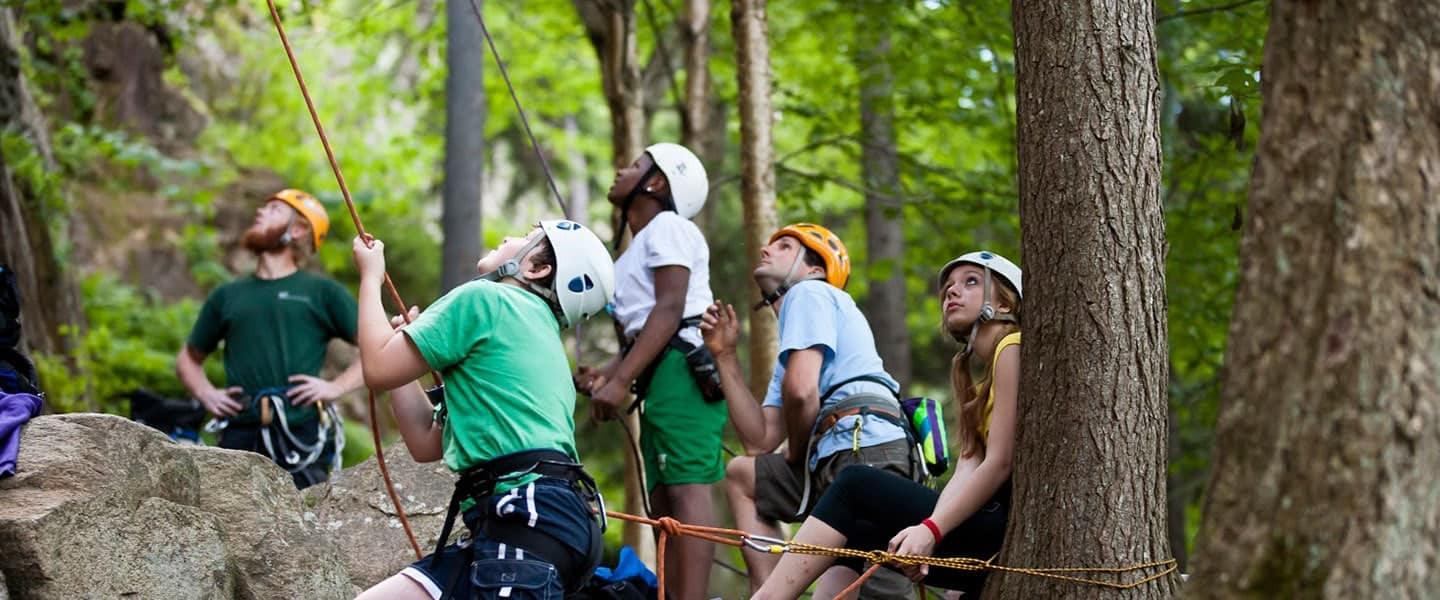
Kismet’s carefully designed and managed education in technical rock climbing presses the development of almost every aspect of a child’s confidence and potential. It is the perfect match for children whose potential is being lost amidst limited material and social capital.
Pillar Three
When students are selected for Kismet scholarships, they are placed in a group that remains together for the four years that they are in the program. These groups live together in the Kismet house and share responsibilities such as cooking, cleaning, and collaborating on important decisions. Every evening, students discuss their “core value contract”, which is a chance to establish a culture in their group reflective of their values. This contract promises a journey of respect, safety, and kindness.
The consistency and support across four years enables allows for lifelong bonds to grow. Students bond with one another because of their shared experiences, and they bond with Kismet staff because they are seen, listened to, and loved as welcome members of their Kismet Family.